New York City is testing new approaches to make public transportation spaces more comfortable and resilient as the city faces increasing heat and heavy rainfall. A new pilot project along Pitkin Avenue in Brownsville introduces four upgraded bus shelter roofs designed to address extreme temperatures, stormwater and the everyday experience of people waiting for buses.
The project includes New York City’s first bus shelter featuring a green roof. The installation uses native plants, grasses and wildflowers to introduce additional greenery into the streetscape while supporting pollinators and helping reduce heat around the bus stop.
The initiative also includes three additional bus shelters equipped with heat-resilient roofing. These shelters use a reflective film designed to reduce the amount of solar heat absorbed by the structures and lower temperatures around the waiting areas.
Testing Green Infrastructure at Bus Stops
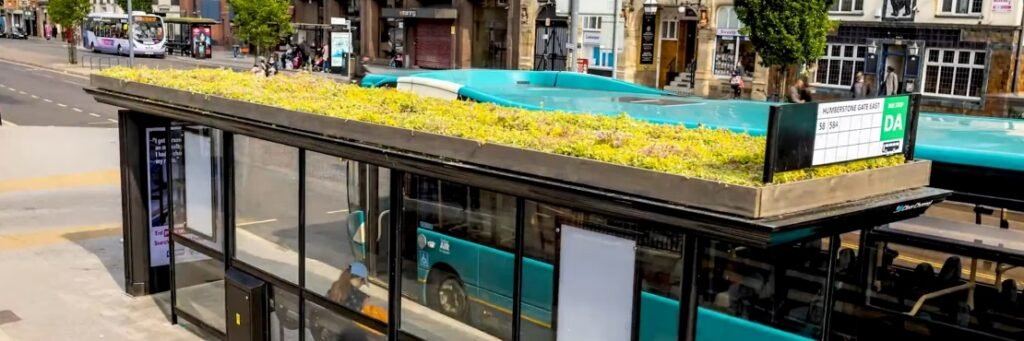
The Brownsville pilot is intended to explore how existing transportation infrastructure can be adapted to provide additional climate benefits. Bus shelters are frequently exposed to direct sunlight and heavy rainfall, making them a practical location for testing measures that could improve comfort and resilience.
The green roof is designed to provide several potential benefits. Vegetation can help reduce heat while also capturing some rainfall, while native plants can contribute to local biodiversity. The approach demonstrates how relatively small changes to existing infrastructure can introduce elements of green infrastructure into densely developed neighborhoods.
The three reflective-roof shelters provide a different approach. Rather than adding vegetation, the reflective film is designed to limit heat absorption while offering a solution that can be installed relatively quickly and at a lower cost.
Focus on Extreme Heat and Heavy Rainfall
Brownsville is considered one of New York City’s neighborhoods that is particularly vulnerable to extreme heat. For people who rely on buses, waiting outdoors can become especially challenging during periods of high temperatures. These climate-related challenges are also relevant to broader efforts to help New York households manage energy costs through programs such as the New York Energy Affordability Program.
The pilot also addresses concerns related to heavy rainfall. Green infrastructure can play a role in managing excess stormwater, while improvements to bus shelters can make public spaces more comfortable during changing weather conditions.
The project is part of broader efforts to strengthen climate resilience along Pitkin Avenue, a busy commercial corridor in Brownsville. The initiative brings together city agencies, community organizations and private-sector partners to examine how climate-focused improvements can support residents, transit riders and local businesses.
A Community-Centered Approach
The project was developed through a partnership involving the Mayor’s Office of Climate & Environmental Justice, Resilient Cities Catalyst, the Pitkin Avenue Business Improvement District and JCDecaux Street Furniture New York.
Community participation is an important part of the pilot. Brownsville residents are being encouraged to provide feedback about the improvements through a community survey available in English and Spanish. Feedback from residents and local businesses can help determine which approaches are useful and whether similar measures could be considered elsewhere.
The project also connects with the Small Business Climate Resilience Program, which focuses on helping commercial corridors prepare for challenges such as extreme heat and flooding. Along Pitkin Avenue, the broader effort includes streetscape improvements, small business support and community-focused public space initiatives.
Exploring Future Applications Across New York City
The Brownsville installations are intended to provide practical information about how different types of bus shelter improvements perform in a real-world setting. Comparing green roofing with reflective materials can help city officials and community partners understand the benefits, costs and maintenance considerations associated with different approaches.
If the pilot demonstrates useful results, lessons from Brownsville could inform future climate-resilience projects in other neighborhoods. The approach also highlights the possibility of using existing public infrastructure to address environmental challenges without requiring entirely new structures.
As New York City continues to experience hotter temperatures and changing rainfall patterns, projects that combine transportation improvements with climate adaptation may become an increasingly important part of neighborhood planning.
Conclusion
The new Brownsville bus shelter pilot demonstrates how everyday public infrastructure can be adapted to address environmental challenges while improving the experience of transit riders. With one shelter using a green roof and three others using reflective roofing technology, the project gives New York City an opportunity to evaluate different approaches to reducing heat and managing rainfall.
Community feedback and observations from the pilot will help determine what lessons can be applied to future projects. For Brownsville, the initiative represents a practical effort to create a cooler, greener and more resilient public environment along Pitkin Avenue.
FAQs
One of the four pilot shelters features New York City’s first green roof bus shelter. It uses native plants, grasses and wildflowers intended to add greenery, support pollinators and help reduce heat around the bus stop.
The other three shelters use a reflective film designed to reflect sunlight and reduce the amount of heat absorbed by the shelter structure and surrounding area.
The Brownsville project is a pilot designed to test different solutions and gather feedback from residents and businesses. Information collected through the initiative could help inform future climate-resilience and public-space projects in other parts of New York City.