New York City continues to face significant challenges across its real estate market, but the latest investment activity suggests that reports of the city’s decline may be premature.
During the first half of 2026, New York City recorded approximately $17.38 billion in investment property sales, representing a 37% year-over-year increase. The activity indicates that investors remain interested in the city, although capital is becoming increasingly selective about where and how it is deployed.
Rather than moving away from New York entirely, many investors are focusing on properties where valuations have reset, fundamentals are improving, or government policies create a favorable investment environment.
Investors Are Becoming More Selective
The current New York real estate market is not characterized by broad-based enthusiasm. Instead, investors are evaluating individual property types based on pricing, rental performance, financing conditions and policy incentives.
Properties with attractive fundamentals and reasonable valuations continue to draw capital. Assets that lack those characteristics are increasingly being evaluated as potential distressed opportunities where investors can acquire properties at lower prices.
This selective approach can be seen across multifamily housing, affordable housing, office properties and new development.
Free-Market Multifamily Housing Attracts Capital
Multifamily investment reached approximately $4.95 billion during the first half of 2026, an increase of 21% from the same period a year earlier.
Free-market multifamily properties represented the largest share of that activity, accounting for approximately $3.39 billion, or 69% of multifamily transaction volume.
One reason for the interest is the difference between current property values and rental growth. Free-market building values remain about 16% below their 2017 peak levels, while rents have increased substantially over the years.
This combination of lower valuations and stronger rental fundamentals has attracted institutional, private and international investors.
The market is also producing different investment strategies. Some investors are acquiring assets at discounted prices, while existing owners may choose to retain properties because of their financing structures and expectations for future growth.
Affordable Housing Offers a Different Investment Model
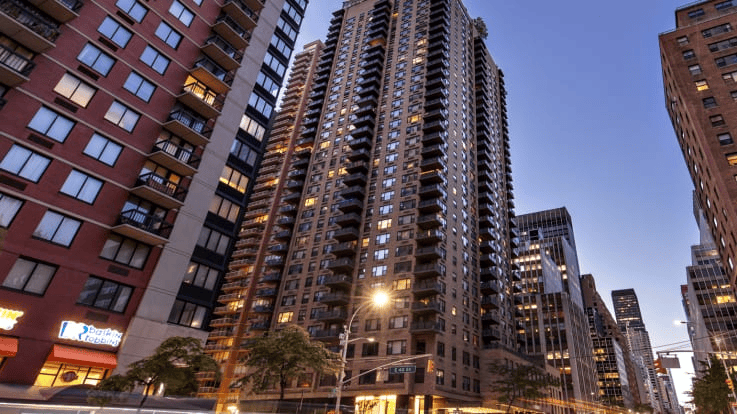
Affordable housing has attracted capital for different reasons. In this segment, government programs, rental subsidies, tax incentives and financing opportunities can help create a stronger connection between social objectives and investment returns.
Project-based Section 8 properties have been particularly active. These properties can combine below-market rents with rental assistance, property tax benefits and access to government-backed financing.
Several significant transactions involving Project-based Section 8 properties occurred during the first half of 2026, demonstrating continued investor interest in affordable housing.
The segment has also generally maintained its value better than many rent-stabilized properties, partly because its financial structure provides greater support for property operations and long-term investment.
Rent-Stabilized Properties Face Greater Pressure
The situation is considerably more difficult for many rent-stabilized properties. Changes to NYC housing regulations have also had a significant impact on property owners and investment strategies, particularly for rent-stabilized housing.
Rent growth has remained limited while operating expenses have increased significantly. According to the data cited in the original analysis, expenses for rent-stabilized properties have grown roughly two and a half times faster than rents over the past six years.
That imbalance has put pressure on operating income, property maintenance and valuations.
The number of vacant rent-stabilized apartments has also become a major concern. More than 57,000 units were reportedly vacant, representing approximately 6% of the city’s rent-stabilized housing stock.
Property values have consequently fallen sharply in this segment. During the first half of 2026, rent-stabilized buildings reportedly traded at an average discount of about 63%.
The situation has encouraged some longtime property owners to sell, while policymakers face growing pressure to find ways to preserve housing while making investment in these properties financially sustainable.
Policy Could Influence the Future of Rent-Stabilized Housing
Several potential approaches could help address the challenges facing rent-stabilized properties.
One strategy would involve converting some rent-stabilized properties into affordable housing through public funding and supportive programs. Another approach could involve creating incentives for private investors to rehabilitate vacant apartments and return them to the housing market.
The central challenge is finding a balance between tenant affordability, property maintenance and investor economics.
Without a sustainable financial model, continued pressure on rent-stabilized properties could contribute to additional deterioration, vacancies and declining investment.
Class A Offices Are Showing Signs of Recovery
New York’s office market also showed stronger activity during the first half of 2026.
Office investment increased approximately 31% year over year to $3.76 billion. Much of the demand has been concentrated in high-quality Class A buildings that offer modern amenities, convenient transportation and attractive workplace environments.
High-end tenants, including law firms, financial institutions and technology companies, continue to lease premium office space.
The changing expectations of office users appear to be influencing the market. Companies are increasingly interested in buildings that offer more than traditional workspaces, including fitness facilities, dining options, transportation access and other amenities.
This trend is encouraging some investors to purchase or reposition buildings based on their ability to attract high-quality tenants.
Class B Buildings Could Benefit From Repositioning
The improvement in Class A office demand could also create opportunities in the Class B segment.
Owners and investors may reposition older office properties by upgrading amenities, improving building quality and targeting tenants seeking a balance between location and cost.
Some properties may ultimately transition into Class B+ or Class A-quality buildings as investors put capital into renovations and modernization.
This strategy could become increasingly important as tenants continue to prioritize high-quality workplace environments.
Office-to-Residential Conversions Gain Momentum
One of the most significant areas of development activity has been the conversion of office buildings into residential properties.
Development investment increased approximately 61% year over year to $3.88 billion during the first half of 2026.
Tax incentives have helped make certain office-to-residential conversions economically viable. A number of office buildings have entered the conversion pipeline, potentially creating thousands of additional residential units.
These projects could provide an important source of new housing while also helping address excess office inventory.
The effectiveness of these conversions, however, depends heavily on construction costs, financing, zoning requirements, tax policy and the physical suitability of individual office buildings.
New Housing Development Remains Critical
New York City continues to face a substantial housing supply challenge.
The city would need to produce tens of thousands of new housing units annually to address its long-term shortage. Current construction levels remain below that target.
Tax incentive programs have played an important role in encouraging residential development. Developers are evaluating projects based on whether available incentives make construction financially feasible.
Increasing housing supply could eventually help moderate rental costs by providing more options for residents. However, achieving that objective requires sustained development activity and policies that support both affordable and market-rate housing.
Interest Rates and Mortgage Maturities Remain Important
Several factors could influence New York’s real estate market over the coming months.
Interest rates remain one of the most important variables. Higher borrowing costs can affect property valuations, development feasibility and investors’ willingness to purchase assets.
Mortgage maturities are another major consideration. Property owners facing refinancing may encounter significantly higher borrowing costs than they had when their original loans were issued. That could create additional sales, refinancing activity or distressed transactions.
Finally, government policy will remain critical, particularly policies affecting affordable housing, rent stabilization, development incentives and office conversions.
Why New York City Continues to Attract Investors
Despite its challenges, New York retains several characteristics that make it attractive to real estate investors.
The city has a large and diverse economy, deep capital markets, extensive transportation infrastructure, strong demand for housing and a substantial commercial property base.
The current market also provides opportunities for investors willing to take a selective approach.
Rather than treating New York as either an attractive or unattractive market as a whole, investors are increasingly examining individual properties and sectors. Properties with strong fundamentals, realistic valuations and favorable policy conditions continue to attract capital.
Conclusion
New York City’s real estate market is experiencing a period of adjustment rather than a straightforward decline.
The 37% increase in investment property sales during the first half of 2026 demonstrates that significant capital continues to flow into the city. However, investors are becoming more disciplined and selective, favoring properties with stronger fundamentals, discounted valuations or supportive government policies.
Free-market multifamily housing, affordable housing and high-quality office properties have attracted considerable interest, while rent-stabilized properties continue to face substantial financial pressure.
The future of the market will depend on interest rates, refinancing conditions, housing policies and the city’s ability to encourage new development. For investors willing to distinguish between stronger and weaker opportunities, New York City continues to offer substantial potential.
FAQs
New York City recorded approximately $17.38 billion in investment property sales during the first six months of 2026, representing a 37% increase compared with the same period a year earlier.
Free-market multifamily housing, Project-based Section 8 affordable housing and high-quality Class A office properties have attracted significant investor interest. Office-to-residential conversions and new development have also gained momentum.
Interest rates, mortgage maturities, rental fundamentals, property valuations and government policies are expected to remain major factors. Housing policies and development incentives could be particularly important for future investment and construction activity.