New York City’s rent-stabilized housing market continues to face financial and operational challenges several years after the Housing Stability and Tenant Protection Act of 2019 (HSTPA) was introduced.
The legislation was designed to strengthen protections for tenants, but its long-term effects have become a major topic of debate among housing advocates, property owners, investors and policymakers. Rising operating expenses, limited rent growth, vacant apartments and declining property values have created increasing pressure on portions of the city’s aging housing stock.
The central question is how New York can protect tenants while also ensuring that landlords have enough financial capacity to maintain and improve residential buildings.
Understanding the Impact of HSTPA
HSTPA significantly changed the economics of rent-stabilized housing when it took effect in 2019. Among its provisions was a restriction on how rents could be adjusted when stabilized apartments became vacant.
Before the changes, landlords had greater flexibility to increase rents following a vacancy under certain circumstances. The restrictions introduced by HSTPA reduced those opportunities, particularly in buildings where regulated rents were substantially below the cost of operating and maintaining the apartments.
Property owners have argued that the resulting financial limitations can make it difficult to justify renovations or return vacant apartments to the market.
At the same time, the housing market experienced several additional economic shocks. The COVID-19 pandemic affected rent collection, particularly in some neighborhoods, while inflation and higher interest rates increased the cost of operating, financing and maintaining properties.
Operating Expenses Have Outpaced Rent Growth
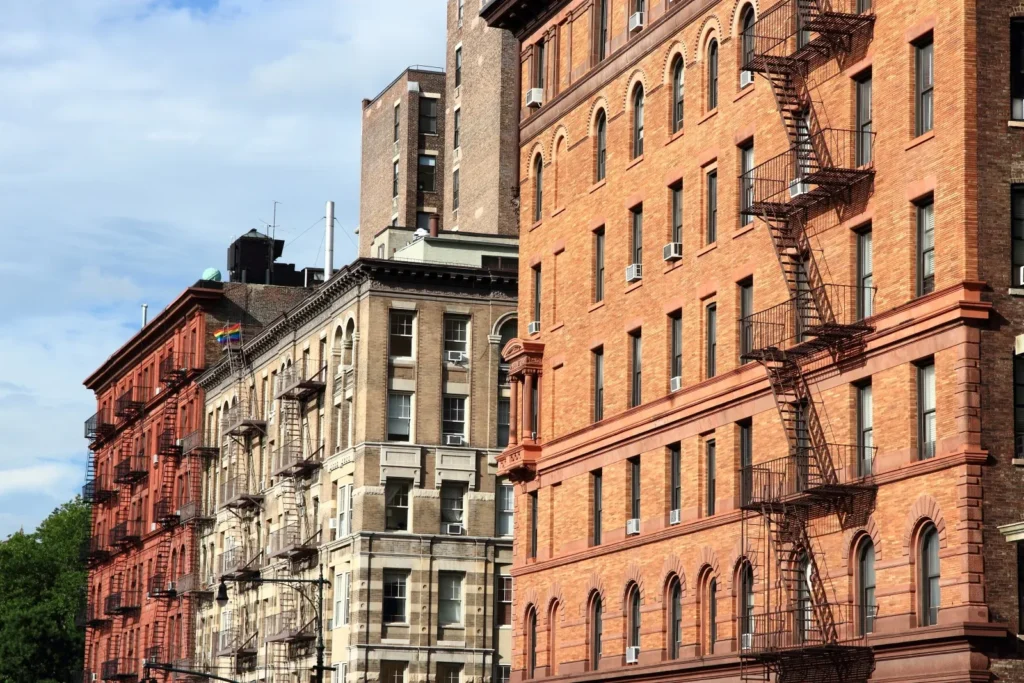
The financial pressure becomes clearer when rent growth is compared with operating costs.
Data cited from Ariel Property Advisors’ 2026 multifamily research indicates that rents in the city’s multifamily market increased approximately 16% over a five-year period, while operating expenses rose by about 40%.
That gap can significantly reduce a building’s net operating income.
For older stabilized properties, the challenge can be particularly severe. When rental income fails to keep pace with property taxes, insurance, utilities, labor, maintenance and debt obligations, owners have fewer resources available for capital improvements.
This can create a difficult cycle: declining property income can reduce building values, lower values can restrict access to financing, and limited financing can make it harder to fund repairs.
Vacant Apartments Are Becoming a Major Concern
One of the most significant issues associated with the current regulatory environment is the number of rent-stabilized apartments that remain vacant.
Some property owners may determine that renovating a heavily regulated unit is financially difficult when the permitted rent does not provide enough income to recover renovation costs and ongoing expenses.
This creates an unusual situation in which housing can remain unavailable despite strong demand for apartments.
Housing advocates and industry representatives disagree over the best solution, but the growing number of vacant units highlights the challenge of maintaining the existing housing supply while preserving affordability.
Could a Vacancy Reset Help?
One proposed solution is a vacancy reset.
Under this concept, a vacant rent-stabilized apartment could receive a new initial rent when it is leased to a new tenant, while the apartment would remain subject to rent stabilization protections afterward.
Supporters argue that such a system could give owners a financial incentive to renovate vacant apartments and return them to the market without changing the protections available to future tenants.
The proposal is presented as a potential compromise because it would focus on vacant apartments rather than increasing rents for tenants currently living in stabilized units.
Critics, however, could raise concerns about affordability and the possibility that changes to vacancy rules could gradually increase rents across the regulated housing system. Any reform would therefore need to balance the financial viability of buildings with long-term tenant protections.
Declining Property Values Create Problems for Everyone
The financial difficulties facing rent-stabilized buildings have also affected property valuations.
Research cited in the original analysis indicates that average values for rent-stabilized properties have fallen substantially since HSTPA took effect. In some markets, valuations have reached levels not seen in decades.
Lower property values may appear beneficial to prospective buyers, but they can create broader problems for the housing system.
Banks and other lenders typically consider a property’s value and income when determining how much financing they are willing to provide. When values fall significantly, owners may have difficulty refinancing existing debt or borrowing money for major capital projects.
That can ultimately affect tenants because older buildings require ongoing investment in plumbing, roofs, heating systems, electrical infrastructure, facades and other components.
Aging Buildings Face the Greatest Pressure
Not all rent-stabilized properties operate under identical financial conditions.
Older, pre-1974 rent-stabilized buildings represent a particularly important segment of New York’s housing stock. Many of these properties operate without the tax benefits or subsidies available to certain newer affordable housing developments.
The economics can therefore be substantially different between older stabilized buildings and newer developments that were constructed under tax incentive programs.
Combining these different property types in broad market statistics can make the overall condition of rent-stabilized housing appear healthier than it is in some neighborhoods.
Data cited from the 2026 Rent Guidelines Board Income and Expense Study showed that certain large pre-1974 properties in the Bronx and Queens experienced negative net operating income during the period analyzed.
Affordable Housing Faces Its Own Financial Challenges
Government-supported affordable housing is not immune to rising expenses either.
Affordable housing providers may operate under regulatory agreements that restrict rents while relying on assumptions about vacancy, rent increases and operating costs.
If actual rent growth remains below expectations while expenses rise faster than projected, buildings can face financial stress.
This matters because financial instability can eventually affect a property’s ability to fund repairs and maintain its existing affordable housing stock.
The broader lesson is that affordability programs require sustainable financial structures. Protecting rents without ensuring adequate resources for building operations can create long-term risks for the housing itself.
What About the Community Opportunity to Purchase Act?
Another policy proposal discussed in New York is the Community Opportunity to Purchase Act (COPA).
The legislation would give designated nonprofit organizations or affordable housing entities an opportunity to purchase certain properties before they are offered more broadly to private buyers.
Supporters view the proposal as a way to preserve affordable housing and prevent vulnerable properties from being lost to market-rate redevelopment.
However, critics argue that changing the potential buyer does not necessarily resolve the underlying financial problems affecting distressed buildings.
If a property cannot generate sufficient income to cover operating costs, taxes, debt and capital improvements, transferring ownership to a nonprofit does not automatically solve the underlying economic problem.
Affordable housing organizations themselves can face increasing expenses and limited rental income.
The Larger Housing Supply Problem
The debate surrounding HSTPA is ultimately connected to New York City’s broader housing shortage. The city needs to maintain its existing apartments while also creating additional housing. Both goals require significant investment. For residents facing rising housing costs and changing living conditions, these pressures can also raise broader questions about whether remaining in New York City is still the right choice. Is It Time to Leave New York City? explores some of the factors that may influence that decision.
The city needs to maintain its existing apartments while also creating additional housing. Both goals require significant investment.
If aging rent-stabilized buildings cannot generate enough income to support maintenance, the existing housing stock could deteriorate. If regulations discourage new construction or conversion, the city could struggle to add enough supply.
A sustainable housing strategy therefore needs to address both affordability and the financial viability of residential properties.
Finding a Balance Between Affordability and Investment
New York’s housing debate is not simply a choice between tenants and landlords.
Tenants need stable, affordable homes, while property owners need sufficient income to maintain buildings, meet regulatory requirements and finance necessary improvements.
Policies that focus exclusively on one side of that equation may create unintended consequences elsewhere.
Potential solutions could include targeted incentives for building rehabilitation, carefully structured vacancy policies, tax programs for preservation, financing assistance and stronger public-private partnerships.
The objective should be to keep apartments affordable while ensuring that the buildings themselves remain financially and physically sustainable.
Conclusion
The effects of New York’s 2019 housing reforms continue to influence the city’s rent-stabilized market.
Limited rent growth combined with rapidly increasing operating expenses, higher financing costs and declining property values has created significant challenges for some owners of older regulated buildings. Those challenges can eventually affect tenants when buildings lack the resources needed for repairs and capital improvements.
A vacancy reset and other targeted reforms have been proposed as ways to encourage investment while maintaining tenant protections. Other proposals, such as COPA, seek to change who can purchase distressed properties.
Ultimately, New York’s housing system needs a solution that recognizes both sides of the equation. Affordability cannot be sustained without adequate investment in the buildings that provide it, and investment policies must also protect the city’s long-term supply of affordable homes.
FAQs
The Housing Stability and Tenant Protection Act of 2019 is a New York housing law that expanded tenant protections and changed regulations governing rent-stabilized apartments. Among other effects, it restricted certain rent increases associated with vacancies.
A vacancy reset is a proposed policy that would allow the initial rent of a vacant rent-stabilized apartment to be reset when a new tenant moves in. The apartment would then continue receiving rent-stabilization protections. Supporters say it could encourage owners to renovate vacant units and return them to the housing market.
Lower property values can make it more difficult for building owners to obtain financing for repairs, renovations and major capital projects. If owners cannot access sufficient capital, aging buildings may experience deferred maintenance, potentially affecting housing quality and tenant conditions.